

Educational disclaimer: This article is intended for educational and informational purposes only. It does not constitute medical advice, diagnosis, or treatment. Always consult your own GP or healthcare professional before making changes to your health routine, particularly if you have an existing medical condition.
HRV: Wellness buzzword or the most useful number on your wristwatch?
Everyone from elite athletes to health enthusiasts is talking about it. Your smartwatch is tracking it. Your fitness app is scoring it. But what exactly is Heart Rate Variability (HRV) - and is it actually worth the hype, or just another metric designed to make you anxious about your own heartbeat?
The short answer: it is a real and meaningful physiological measure - not just a fitness-app gimmick. But it is also not a stand-alone test for health, and a single low reading can happen for many entirely benign reasons. Here is what the science actually says, and what it does not.
Are you tracking your heart rate, but ignoring the spaces in between?
What if those spaces were telling you something not just about your body - but about your mind, and your soul?
If you wear an Apple Watch, Garmin, Oura ring, or WHOOP, you have probably noticed a metric called Heart Rate Variability (HRV). It might seem like just another confusing number, but resting HRV is a meaningful, evidence-based indicator of your autonomic nervous system function, recovery, and stress resilience - when interpreted as a trend over time, not as a single verdict.
Here is what the science says about HRV, what it cannot tell you, and the most practical steps to improve it.
Hooked on the heart: what exactly is Heart Rate Variability (HRV)?
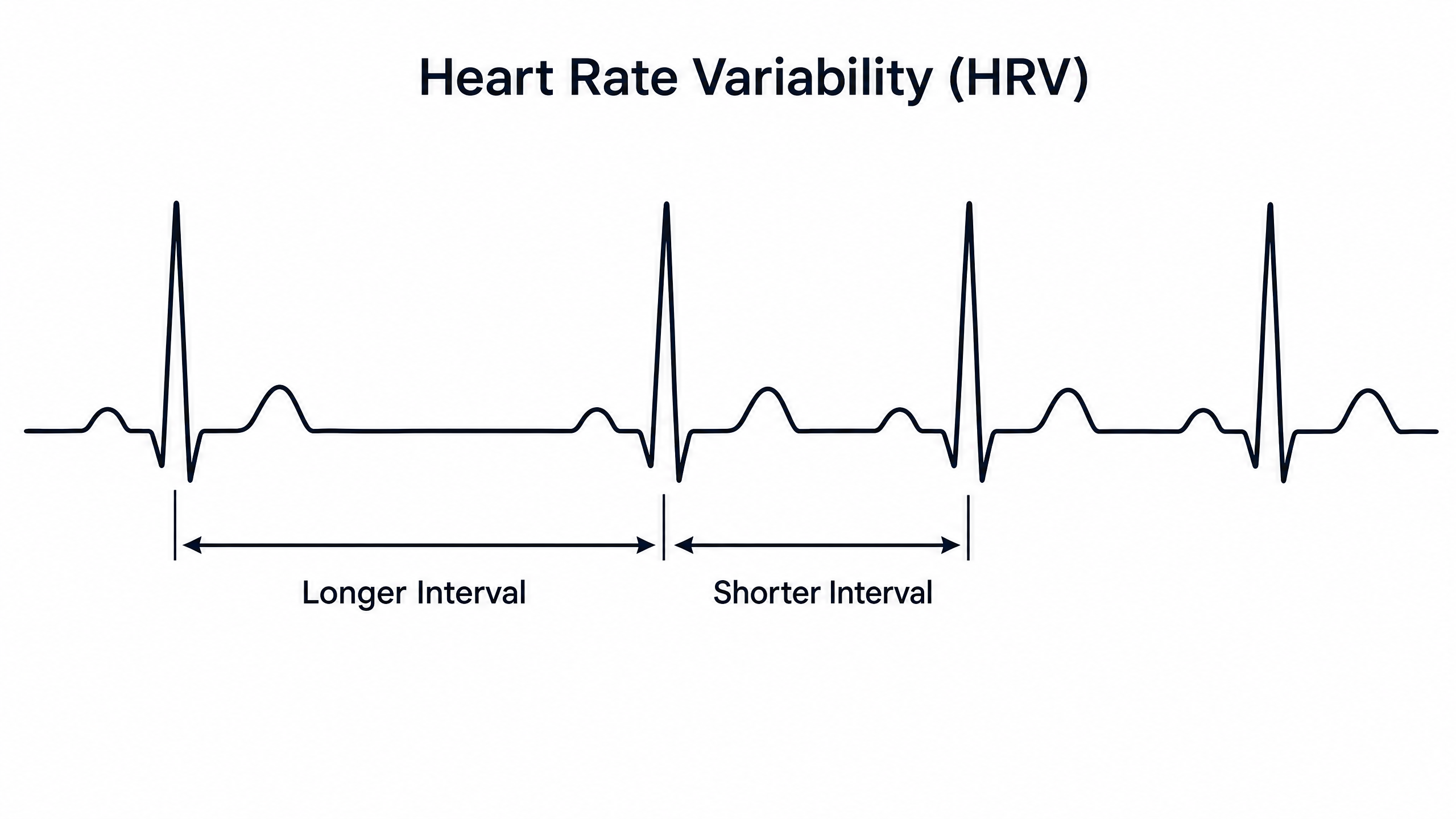
Heart Rate Variability is exactly what it sounds like: the variation in time between consecutive heartbeats [1]. Unlike your resting heart rate, which measures how many times your heart beats per minute, HRV measures the tiny, millisecond fluctuations between those beats.
You might think a perfectly steady, metronome-like heartbeat is ideal. But in reality, a healthy heart is a responsive heart. High HRV means your heart is subtly and rapidly adapting to changes in your environment and internal state [1].
Why does this matter? Because HRV is a direct window into your autonomic nervous system (ANS). The ANS controls involuntary functions like breathing, digestion, and heart rate, and it has two main branches:
The Sympathetic Nervous System: Your “fight or flight” stress response.
The Parasympathetic Nervous System: Your “rest and digest” recovery response.
In many ancient traditions, this balance has another name: inner peace. Modern science is now giving us the physiology behind it.
When your nervous system is balanced, your heart rate fluctuates naturally as these two systems push and pull against each other [1] [2]. When you are chronically stressed, overtrained, or unwell, the sympathetic system takes over, leading to a rigid, inflexible heartbeat - and a lower HRV [3].
The clinical significance: why we care about HRV
As a doctor, I look at HRV because it tells a profound story about your cardiovascular and mental health.
1. Cardiovascular health and resilience
Research consistently shows that higher HRV is linked to better cardiovascular fitness and a lower lifetime risk of cardiovascular disease [1] [2]. Conversely, a persistently low HRV is an independent predictor of increased mortality, particularly in patients recovering from heart attacks or dealing with heart failure [4]. HRV is increasingly recognised as one marker of physiological resilience and healthy ageing.
2. HRV, mental health, and stress resilience
The mind-body connection is very real, and HRV gives us one of the clearest physiological windows into it. Studies have demonstrated that psychological stress, anxiety, and depression directly impact the autonomic nervous system, leading to lower HRV [3]. High HRV, on the other hand, indicates strong vagal tone - meaning your parasympathetic nervous system is effectively calming your body down, promoting emotional regulation and stress resilience [3].
But many traditions would go further - arguing that the soul, too, plays a role in this balance. The emerging science on prayer, gratitude, and contemplation suggests they may not be wrong.
3. Sleep and recovery
If you want to know how well you are recovering from daily life, check your morning HRV. Poor sleep quality, insomnia, and untreated obstructive sleep apnoea all reduce HRV by keeping the body in a state of sympathetic overdrive [5].
What is a “normal” HRV range?
One of the most common questions I get is: “What is a good HRV score?”
The truth is, HRV is highly individualised. It naturally declines as we age, and men typically have slightly higher HRV than women [6]. What matters most is not comparing your number to someone else’s, but tracking your own baseline over a few weeks to see how your lifestyle affects your personal trends [1].
Here is a general guide to average HRV - typically measured by wearables as RMSSD (Root Mean Square of Successive Differences, a standard time-domain measure of HRV) - by age:
| Age Range | Average HRV (RMSSD) |
|---|---|
| 20-29 | 55-105 ms |
| 30-39 | 45-90 ms |
| 40-49 | 35-75 ms |
| 50-59 | 25-55 ms |
| 60-69 | 20-45 ms |
| 70+ | 15-35 ms |
Data adapted from general population norms [6].
A note on wearables: HRV values cannot be directly compared between different wearable devices, such as comparing an Oura ring to an Apple Watch, because they use different sensors, algorithms, and averaging methods. Always compare today’s HRV with your own previous measurements on the same device.
Why did my HRV suddenly drop?
A temporary drop in HRV is rarely a cause for concern. It may occur because of:
- Poor or disrupted sleep
- Alcohol consumption
- Illness or fighting off an infection
- Dehydration
- Hard exercise or overtraining
- Emotional stress or anxiety
- Travelling, especially across time zones
- Menstrual cycle fluctuations
- Spiritual or existential distress - grief, loss of meaning, or a sense of disconnection
One low reading is rarely important. It is the long-term trend that matters.
What HRV cannot tell you: HRV is a useful wellness marker, but it cannot diagnose heart disease, anxiety, burnout, or any medical condition on its own. It should always be interpreted alongside symptoms, medical history, and where appropriate, clinical assessment.
Additionally, certain medications - including beta-blockers, antidepressants, stimulants, and antiarrhythmics - can significantly influence HRV readings.
Practical ways to support your HRV
If your HRV is lower than you would like, do not panic. HRV is highly responsive to how you care for yourself - physically, mentally, and spiritually. The interventions below reflect all three dimensions, ranked broadly by strength of evidence - the first two have the most consistent research support, while the later ones are promising but more individual in their effect.
1. Prioritise sleep and core lifestyle factors
Sleep consistency is the single most plausible and practical lever for improving HRV. Adequate, high-quality sleep of 7-9 hours is non-negotiable for parasympathetic recovery [5]. Beyond sleep, maintaining a healthy body weight, eating a Mediterranean-style diet, reducing alcohol intake, treating obstructive sleep apnoea, and stopping smoking are all major, well-evidenced determinants of a healthy HRV.
2. Regular aerobic exercise
Conditioning is one of the most evidence-aligned ways to improve autonomic fitness over time. Regular aerobic exercise - walking, cycling, swimming, or jogging - builds cardiovascular fitness and raises HRV gradually [5]. The key is consistency rather than intensity; overtraining can temporarily suppress HRV.
3. Paced breathing, yoga, and meditation
Of the three, breathwork and yoga have the strongest and most consistent evidence base for improving HRV. A large randomised controlled trial found that six months of yoga breathing practice (Bhramari Pranayama) produced significant improvements in HRV and a measurable shift toward parasympathetic dominance compared to controls [12]. A 2025 pilot RCT of Sudarshan Kriya Yoga (SKY) - a structured breath-based meditation - found that participants had significantly higher resting HRV after just three days, with improvements sustained at eight weeks [16].
The picture for seated mindfulness meditation alone is more mixed. A 2021 meta-analysis of 19 randomised controlled trials found that mindfulness-based interventions did not produce statistically significant improvements in resting HRV over control conditions, though a positive trend was observed [17]. This does not mean meditation is without value - its benefits for anxiety, emotional regulation, and stress resilience are well-established - but it suggests that breathwork and movement-based practices such as yoga are likely the more direct route to improving HRV specifically.
The simplest starting point remains slowing your breath to about 6 breaths per minute: inhale for 5 seconds, exhale for 5 seconds. This paced breathing technique is the common thread running through yoga, pranayama, and many contemplative traditions, and it is the most reliably documented way to acutely stimulate parasympathetic activity [11].
4. Cold exposure
Brief, controlled cold exposure - such as ending your shower with 30-60 seconds of cold water - has been shown in a meta-analysis to enhance parasympathetic nervous activity and improve HRV [15]. This is a promising adjunct, though individual responses vary.
5. Spiritual and contemplative practices: science finally catching up
Human beings have prayed, expressed gratitude, and sought stillness for thousands of years - long before anyone had heard of the autonomic nervous system or measured an RMSSD.
These practices were not born from clinical trials. They were born from lived experience, from wisdom passed down through generations, from an intuitive understanding that the body, mind, and soul are not separate systems but one deeply interconnected whole.
Now, science is beginning to catch up. And what it is finding is quietly extraordinary.
Studies suggest that Islamic prayer (Salah) and Quran memorisation are associated with improved parasympathetic activity and cardiovascular recovery [7] [8] [10]. Gratitude practice has been linked to reduced inflammation, better sleep, and improved mood in cardiac patients [13]. Rhythmic, repetitive prayer - whether the Rosary, dhikr, or silent contemplation - naturally synchronises the breath and may shift the nervous system toward rest and recovery [9]. The body, it turns out, responds to devotion.
This is perhaps the most important message in this entire article: health is not achieved by treating the body alone. The evidence on HRV tells us that our nervous system is exquisitely sensitive to how we live, how we rest, how we move - and how we connect to something greater than ourselves. Harmony and health are most fully realised when body, mind, and soul are all tended to.
If these practices are not part of your life, that is completely fine - the sleep, exercise, and breathwork tools above are more than enough to work with. But if prayer, gratitude, or contemplation are already woven into who you are, carry them with confidence. The science is still growing, the studies are often small, and much remains to be understood. But the direction of the evidence is clear: the things we have done for our souls for centuries may also be doing something measurable, and meaningful, for our hearts.
Where to start: your practical first step
All of this can feel overwhelming. The best way to practically introduce these ideas into your life is to start with just one thing: a daily practice of stillness.
You do not need an app, a wearable, or a yoga mat. Begin with just 5 minutes each morning - sit quietly, close your eyes, and slow your breath. Inhale for 5 seconds, exhale for 5 seconds.
That is it. This single habit begins to train your vagus nerve, shift your nervous system toward parasympathetic dominance, and lay the foundation for everything else in this article.
Whether you call it meditation, prayer, or simply stillness - the act of pausing, breathing, and turning inward is where the body, mind, and soul begin to speak the same language.
Once that feels natural, you can layer in the other practices that resonate with you. The key is consistency over intensity. Small, repeated acts of stillness and presence compound over time into measurable improvements in your HRV - and your health.
Frequently asked questions
Does a low HRV mean I have heart disease? No. HRV reflects how your nervous system is functioning rather than diagnosing disease. Many factors - including stress, poor sleep, illness, and intense exercise - can temporarily lower HRV.
Should I compare my HRV with other people? No. HRV varies considerably with age, sex, and genetics. Your own long-term trend is far more meaningful than comparison with others.
Can I improve my HRV? Yes. Regular exercise, quality sleep, stress management, healthy nutrition, and contemplative practices such as breathwork, yoga, meditation, or prayer have all been associated with improvements in HRV over time.
Is a higher HRV always better? Not necessarily. Extremely high or unusually fluctuating HRV may occasionally occur in illness or overtraining. The most useful measure is a stable HRV that reflects good recovery and overall health.
When to see a doctor
While day-to-day fluctuations are normal, you should seek medical advice if your HRV drops significantly and stays low without an obvious lifestyle cause, or if you experience a low HRV alongside any of the following symptoms:
- Unexplained palpitations or irregular heartbeats
- Fainting or dizziness
- Chest discomfort or pain
- Persistent breathlessness
- Unexplained decline in exercise tolerance [4]
The takeaway: Track your HRV as a trend, not a verdict. Look for multi-day or weekly patterns rather than reacting to a single number. Prioritise sleep consistency first, add regular aerobic exercise gradually, and use paced breathing or short meditation as a low-risk, practical starting point. Spiritual and contemplative practices may add further benefit for those who find them meaningful - and for those who already practise them, know that the science is beginning to affirm what your soul has always known.
Start small. Start today. Start with five minutes of stillness.
Your heart is not just a pump. It is a messenger. And when the body, mind, and soul are in harmony - it shows.
Stay soulful, stay healthy.
References
- Harvard Health Publishing. (2025). How relevant is heart rate variability?
- Mayo Clinic. (2024). Your wearable says your heart rate variability has changed. Now what?
- Wang, Z., et al. (2025). Heart rate variability in mental disorders: an umbrella review of meta-analyses. Translational Psychiatry, 15, Article 104.
- Shaffer, F., & Ginsberg, J. P. (2017). An Overview of Heart Rate Variability Metrics and Norms. Frontiers in Public Health, 5, 258.
- Fein, T., Muhammad, T., & Lee, S. (2026). The interaction between exercise and sleep with heart rate variability: cross-sectional study. European Journal of Applied Physiology, 126(1), 223-237.
- Voss, A., et al. (2015). Short-Term Heart Rate Variability - Influence of Gender and Age in Healthy Subjects. PLOS ONE, 10(3), e0118308.
- Shaverdi, Y., et al. (2024). The Effect of Islamic Praying on Heart Rate Variation in Adult Muslims. Journal of Modern Rehabilitation, 18(2), 179-188.
- Sobhani, V., et al. (2022). Islamic praying changes stress-related hormones and genes. Journal of Medicine and Life.
- Jansen, G. The Rosary, Meditation, and the Vagus Nerve. Ignatian Spirituality.
- Ghazali, A. R., et al. (2024). Quran memorisation and heart rate variability: How do they correlate? World Journal of Clinical Cases.
- Tyagi, A., & Cohen, M. (2016). Yoga and heart rate variability: A comprehensive review of the literature. International Journal of Yoga.
- Kuppusamy, M., et al. (2020). Effects of yoga breathing practice on heart rate variability in healthy adolescents: a randomized controlled trial. Integrative Medicine Research, 9(1), 28-32.
- Mills, P. J., et al. (2015). The Role of Gratitude in Spiritual Well-being in Asymptomatic Heart Failure Patients. Spirituality in Clinical Practice.
- Ueda, S. (2024). The neurobiological link between prayer, breath control and serotonin release. International Journal of Science and Research Archive, 13(2), 629-646.
- Jdidi, H., Dugué, B., de Bisschop, C., Dupuy, O., & Douzi, W. (2024). The effects of cold exposure (cold water immersion, whole- and partial-body cryostimulation) on cardiovascular and cardiac autonomic control responses in healthy individuals: A systematic review, meta-analysis and meta-regression. Journal of Thermal Biology, 121, 103857.
- Ganesan, V., et al. (2025). Effects of Sudarshan Kriya Yoga (SKY) Breath Meditation on Heart Rate Variability, Sleep and Mental Health in Healthy Individuals: A Pilot and Feasibility Randomized Controlled Trial. medRxiv.
- Brown, L., et al. (2021). The Effects of Mindfulness and Meditation on Vagally-Mediated Heart Rate Variability: A Meta-Analysis. Psychosomatic Medicine, 83(6), 631-640.